Why Every Vibe Games Title Has Exactly One Input
Every game on this site follows the same rule: one input. ORBIT.IO is a tap. GROUND.IO is a hold. DODGE.IO is a drag. INK.IO is a stroke. SPLIT.IO is a tap again, but a tap that means something completely different. DON'T SQUISH BOB is a drag on the walls instead of on a character.
That rule sounds like a gimmick. It's actually the most useful design constraint I've found, and this post explains why.
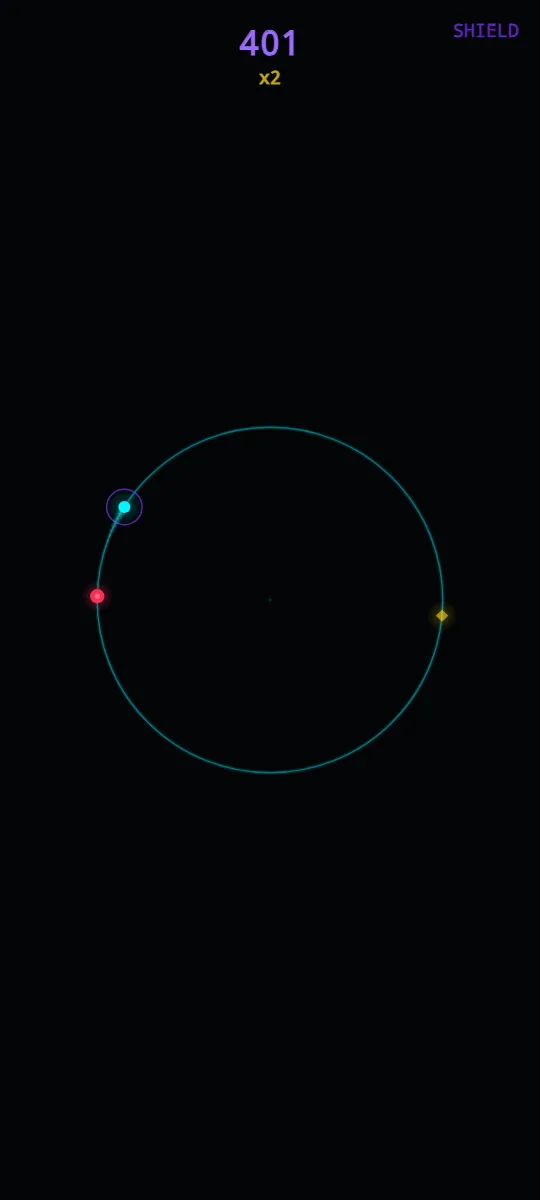
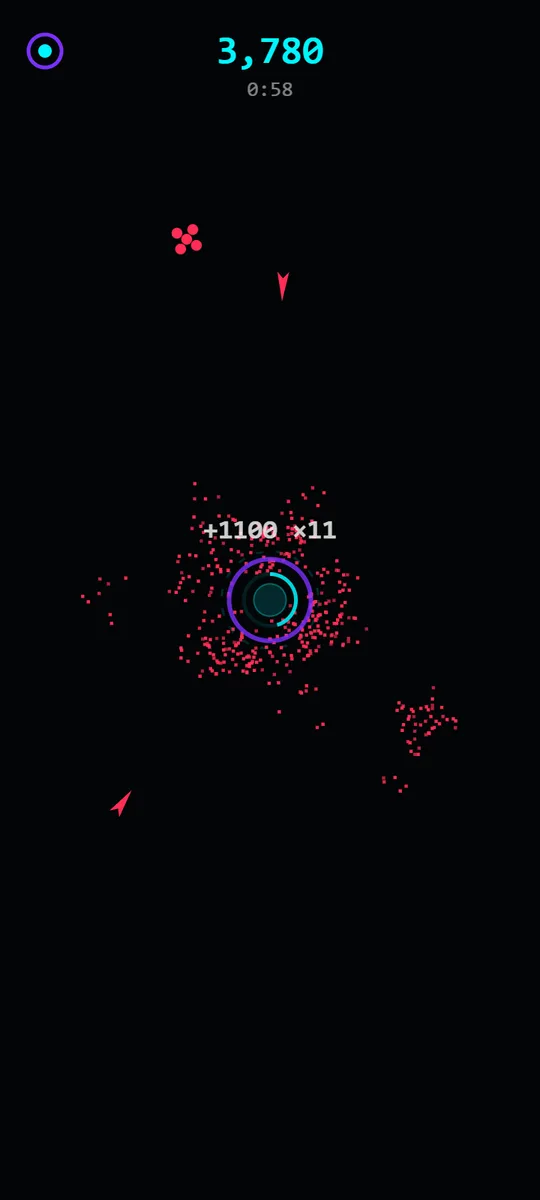
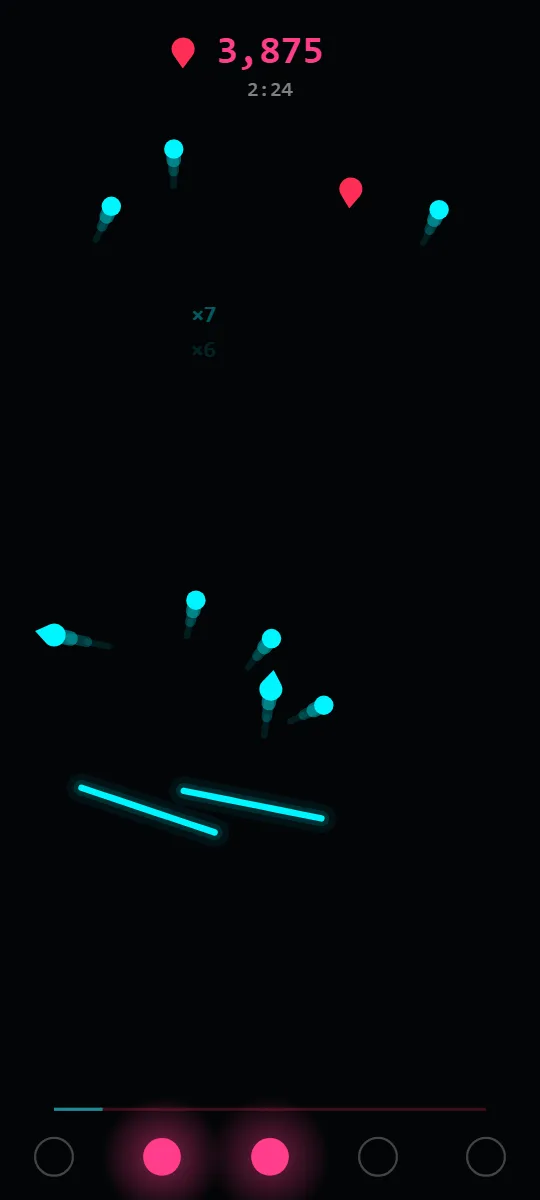
Three games, three single inputs.
One verb forces the game to be about timing
When a player can only do one thing, the only interesting question left is when to do it. In ORBIT.IO you can't steer, speed up or stop. You can only reverse. So every threat on screen becomes a timing puzzle: reverse now and you dodge what's ahead but turn toward whatever was behind you; wait and you might run out of room.
Add a second button, like a dash or a shield, and the game gets easier to design and less interesting to play. A second input is an escape hatch. It lets the designer avoid solving the hard problem, which is making one action carry an entire difficulty curve.
The depth has to come from the threats
If the player's verb never changes, the game has to change around them. That's why each game introduces its threats one at a time over the first few minutes of a run, and why each threat has exactly one behavior. In GROUND.IO, Crawlers walk straight in. Rushers stop, flash and dash. Shells need two hits. Forks split into homing fragments. Lurkers circle the edge and then dive.
None of those threats asks the player to learn a new control. Each asks them to use the same hold-and-release in a new way: blast early for the Rusher, wait for the Swarm to bunch up, go into Overdrive for the Shell. Across the six games there are 35 threat types, and every one of them exists to make one input feel different.
Update, October 13, 2026: PHASE.IO has since joined the catalog. Its input is a hold too, but holding turns you into a ghost instead of charging a blast, which brings the catalog to seven games and 41 threat types.
It makes the games playable anywhere
One input also means the games work on any device. A tap is a click. A drag is a mouse drag. There's no on-screen joystick to fight with and nothing to learn before the first run. Someone can open a game link, understand the control in a second, and be playing before the page has finished loading its sounds.
It keeps monetization honest
A game with upgrade trees and unlockable abilities has a natural place to sell things. A game with one input doesn't: there's nothing to make stronger. That's deliberate. The only ads inside the games are optional rewarded videos, where you choose to watch one to keep a run going. Nothing in the catalog can be bought that makes you better at it.
What the rule rules out
Plenty of good ideas don't survive it. Several game concepts were dropped because they needed a second action to work. The test is simple: if the game isn't fun with only its one verb, the verb is wrong, and no amount of extra buttons will fix that.
If you want to see how each game builds a full run out of one action, the game guides break down every threat and how to handle it.
More from the Devlog
How the Daily Challenge turns a calendar date into a run that's identical for everyone, and why that makes scores fair.
ORBIT.IO, DODGE.IO and SPLIT.IO began as Android apps. Their browser versions are line-by-line ports. Here's what that took.
How ORBIT.IO introduces six threat types over two and a half minutes, and the fairness rules that keep every death your own fault.