Every Threat Gets a Warning: Fairness in Fast Arcade Games
The fastest way to make a hard game feel bad is to kill the player with something they couldn't have seen. Every game in the Vibe Games catalog follows one rule: nothing should be able to hurt you before you've had a chance to notice it. This post collects the specific systems that enforce that rule.
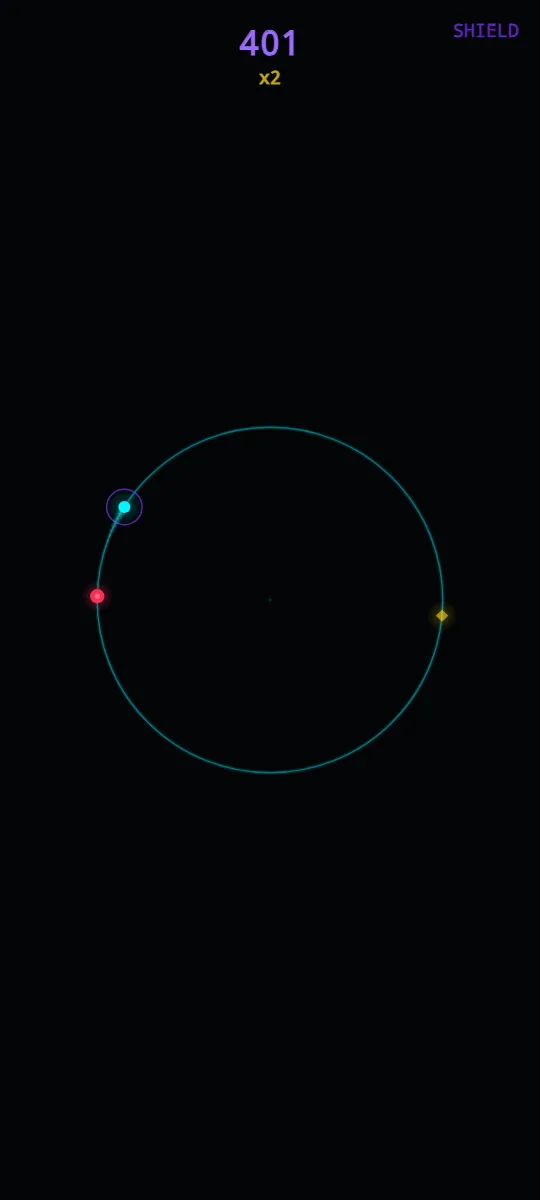
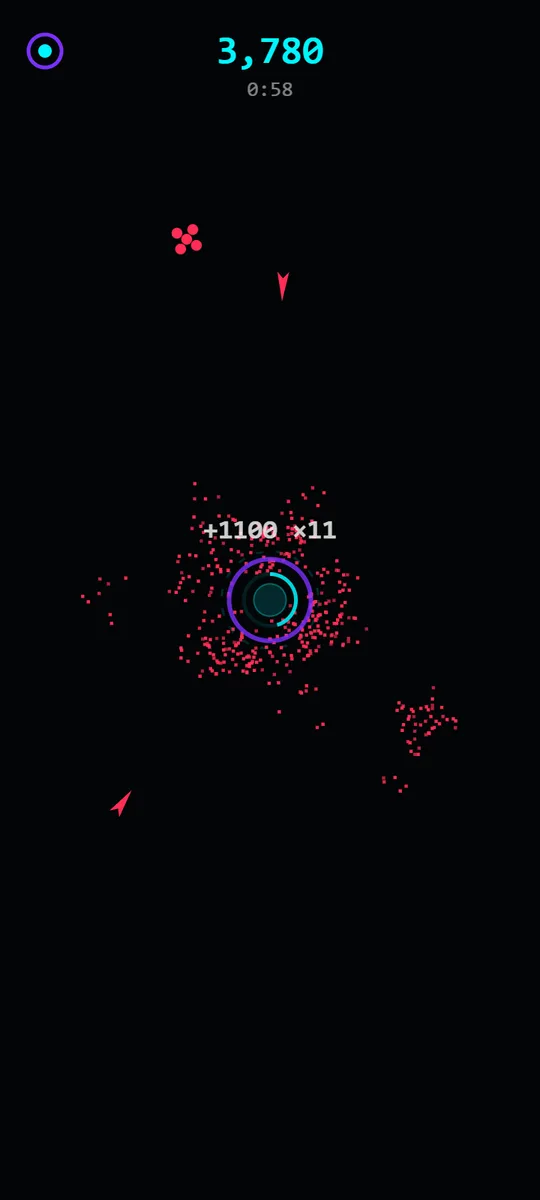
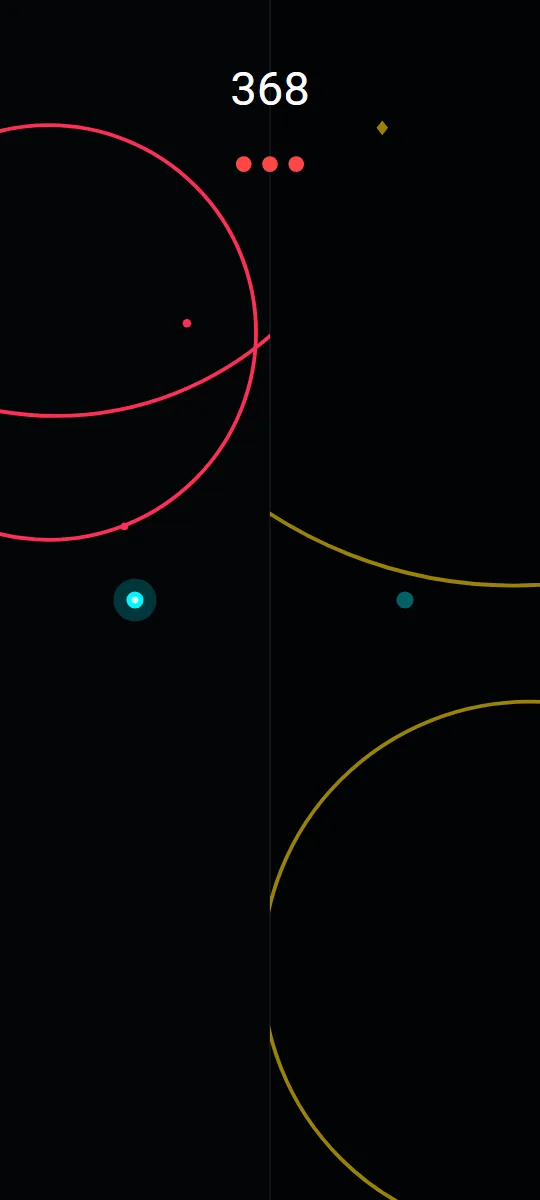
Mid-run in three of the games.
Fade-ins
Threats that appear in the middle of the action don't become dangerous immediately.
- In ORBIT.IO, Orbit Mines can't hurt you while they're fading in, and Chasers and Reversers appear first as hollow, pulsing outlines before they turn solid.
- In DODGE.IO, Teleporters can't hurt you while they're materializing after a jump.
Telegraphs
Attacks that strike suddenly announce themselves first.
- DODGE.IO's Lasers draw a thin charge line exactly where the beam will fire.
- GROUND.IO's Rushers stop and flash before they dash, and Lurkers flash before they dive.
- INK.IO's Divers pause in mid-air before diving.
- ORBIT.IO's Shrinkers show a pulsing ring where the orbit will shrink to, with a SHRINK! label.
- Don't Squish Bob marks every spike's spawn point with a pulsing warning before it appears.
Guaranteed reaction time
Some threats need a stricter rule. In ORBIT.IO, threats flying in from off screen are slowed if necessary so they're visible for at least about a second before they can reach you. Orbit Mines always spawn far around the track from you. Pulse Rings always place their escape gap near your current position, so it's reachable.
Mercy after a hit
Games with more than one life give you breathing room after losing one. SPLIT.IO has a short mercy window after a hit where further hits are absorbed. ORBIT.IO and GROUND.IO give brief invulnerability after a shield breaks.
Warnings can scale too
Warnings don't have to stay generous forever. In Don't Squish Bob, spike warnings start at about 0.8 seconds and shrink to about half a second late in a run. That's a legitimate way to raise difficulty: the warning still exists, so a death is still fair, but it asks for faster reactions.
Why it matters
When a player dies to something they saw coming, they think "I should have reacted sooner" and hit Play Again. When they die to something they couldn't have seen, they think "that was cheap" and close the tab. Fair warnings are the difference. Each game's guide lists its threats and the warning signs to watch for.
More from the Devlog
The design rule behind the whole catalog: one verb per game, and why constraint produces better arcade games than features do.
How the Daily Challenge turns a calendar date into a run that's identical for everyone, and why that makes scores fair.
ORBIT.IO, DODGE.IO and SPLIT.IO began as Android apps. Their browser versions are line-by-line ports. Here's what that took.